
Laminate Dental Veneers in Turkey
Your smile is your window to the world. It is both a reflection of your self-confidence and an important part of first impressions. However, discoloration, wear, minor misalignments, or gaps that develop over time can cast a shadow over this perfect picture. This is precisely where laminate dental veneers, one of the most important aesthetic solutions in modern dentistry and also offered by Antalya Dental A.R.T Clinic, come into play. These technologically advanced veneers are one of the fastest, safest, and most effective ways to achieve the flawless, radiant smile you've always imagined.
What are laminate dental veneers?
It is an ‘aesthetic shell’ or ‘thin mask’ that is bonded only to the front surface of your teeth, covering imperfections and matching the color of your teeth. This treatment is a much more conservative (tooth-preserving) alternative to full ceramic crowns (caps), especially for teeth where aesthetics are a priority.
What kinds of laminate dental veneers are there?
There are different types of laminate dental veneers, which are based on how they are applied, what materials are used, how the teeth are prepared, and how they are made.
By how it is used
Direct veneers (composite):
The dentist usually shapes these in one visit by putting layers of composite resin directly on the tooth. This method costs less and usually doesn't require as much work on the teeth.
Indirect veneers:
After taking an impression of the tooth, they are made in a lab or with computer-aided design and manufacturing (CAD/CAM) systems and then glued to the tooth. They can be made of porcelain or composites that are used in labs.
Based on the material used
Porcelain (Ceramic) veneers:
This is the most common and beautiful group.
Feldspathic porcelain:
Made by firing layers of powder and liquid together. It can be made very thin (0.5 mm or less), and it is the material that best mimics how natural tooth enamel lets light through.
Glass ceramics:
They are made by hot-pressing them. Lithium disilicate (E-max) is especially good for both front and back teeth because it lasts a long time and looks good.
Composite resin veneers:
These are made from filling materials that are the same colour as teeth. They are more likely to get dirty and wear out than porcelain, but they are easier to fix.
Traditional veneers:
To put them on, you have to take off a layer of the tooth's front surface that is about 0.4 mm to 0.7 mm thick. This lets the porcelain settle naturally on the tooth without making it thicker.
Ultra-thin veneers and contact lenses for the mouth:
Thanks to advances in technology, restorations can now be made that are 0.3 mm thick or less.
Minimal-prep:
The enamel is only slightly roughened, by 0.1–0.3 mm.
No prep:
It sticks directly to the enamel without hurting the tooth structure. It is usually used when the teeth are too far back or there are gaps between them (diastema)
According to production technology
CAD/CAM Veneers:
Designed using digital scanners and computer software, they are produced by carving from special ceramic blocks. This method reduces the margin of error and shortens the treatment time (sometimes to a single session).
Refractory die technique:
A traditional, highly skilled method where porcelain is manually shaped on a special mould.
Which type should be preferred in which situation?
If preserving your tooth structure is a priority, ‘tooth contact lenses’ (no-prep) are preferred; if the highest aesthetics and durability are targeted, ‘porcelain (especially lithium disilicate)’ veneers are preferred; if a faster and more cost-effective solution is desired, ‘direct composite’ veneers are preferred.
Laminate veneers are ideal for solving both visual and structural problems, such as:
Colour problems
- Permanent grey-blue stains caused by medication (tetracycline),
- White stains caused by excess fluoride (fluorosis),
- If there are color changes due to trauma or genetic causes that cannot be removed by whitening, these stains are perfectly masked.
Shape and size problems:
- If there is a gap between the two front teeth (diastema),
- If the teeth are smaller than normal (microdontia) or cone-shaped (peg lateral),
- If the shape of the teeth is not desirable, this method can be used to achieve the ideal form.
Alignment problems:
If the teeth are slightly crooked, rotated, or tilted inwards, veneers can be used to achieve a straight alignment.
Structural damage:
- Small chips on the edges of the teeth,
- Enamel tissue lost due to wear or erosion can be restored with laminate veneers.
This method is not suitable for everyone. It is not recommended in the following cases:
- Teeth grinding or clenching (bruxism): If you unconsciously clench or grind your teeth at night,
- Difficult bite: If your front teeth do not align properly (edge-to-edge) or if you have a crossbite,
- Insufficient tooth enamel: Strong enamel tissue is required for the bonding process. If your tooth lacks sufficient enamel,
- Uncontrolled decay or gum disease: These underlying issues must be treated first.
- Very dark stains: As veneers are thin, it may be difficult to completely conceal very dark stains (especially brown-black tones), which may result in an unnatural appearance.
The area covered and tooth preparation (the most fundamental difference)
Laminate veneer:
- It is applied only to the visible front surface of your tooth. The back (tongue-facing side) is not touched.
- Therefore, only a thin layer (about the thickness of a fingernail) is removed from the tooth. It is a minimal (conservative) procedure.
Crown (Capping):
- Prepared to completely cover all sides of your tooth (front, back, sides, and chewing surface).
- Therefore, the tooth is reduced more extensively from all sides. It is an invasive procedure.
Purpose and areas of use
Laminate veneer (Aesthetic solution):
Intended for ‘improving appearance’. Main areas of use:
- Colour changes (tetracycline stains, etc.)
- Closing gaps between teeth
- Shape and size corrections
- Camouflaging minor misalignments
Crown (Strength and function solution):
Intended to ‘protect and restore a weakened or damaged tooth.’ Main applications:
- Weakened teeth that have undergone root canal treatment
- Teeth with large fillings or fractures
- Severely worn teeth
- Implant-supported prostheses
Durability
Laminate veneer:
As it is made of thin porcelain, there is a risk of breakage when subjected to a hard impact or when biting down on something hard. It is not recommended for those with teeth grinding (bruxism) problems.
Crown:
As it is a thick structure that covers the entire tooth, it is much more resistant to chewing forces and impacts.
Reversibility:
Laminate veneer:
The abrasion process is only performed on the outermost layer, known as the enamel. This process is permanent; the enamel does not grow back. However, this is not the case with no-prep veneers.
Crown:
As the tooth is reduced significantly more, there is absolutely no reversibility. You will have to use the crown for life.
There are several important steps in the process of applying laminate veneers (porcelain laminates), and each one must be done with great care, from planning to permanent bonding. This process goes through these steps:
Making a diagnosis and planning treatment
The first step is to find out what the patient wants, do a clinical exam, take pictures, and make diagnostic models.
Digital smile design:
Digital software is used to find the best tooth shapes that will make your face look more balanced.
Wax-up and Mock-up:
To show what the teeth will look like when they are done, a wax model (wax-up) made in the lab is used to do a temporary trial (mock-up) in the mouth. This step helps figure out how much abrasion to do ahead of time and lets the patient see the results.
Getting the teeth ready (preparation)
Controlled preparation is done on the front surface (labial) of the tooth to make room for the veneer.
How much less:
For the best results, the depth should be between 0.3 mm and 0.7 mm, which keeps the enamel tissue intact. Keeping the enamel tissue intact makes the bond between the veneer and the tooth much stronger.
Getting ready for the incisal edge:
There are different design options for the cutting edge of the tooth, like "window," "bevel," or "overlap."
Line of finish:
A chamfered (grooved) finishing line is usually made at the gum line so that the porcelain can move naturally.
Impression taking and shade selection
Gingival retraction:
Retraction cords (gingival cord) are used to define the gingival margins for a precise impression.
Impression methods:
Traditionally, silicone-based impression materials are used, or teeth are digitally scanned (optical impression) using modern CAD/CAM systems.
Colour determination:
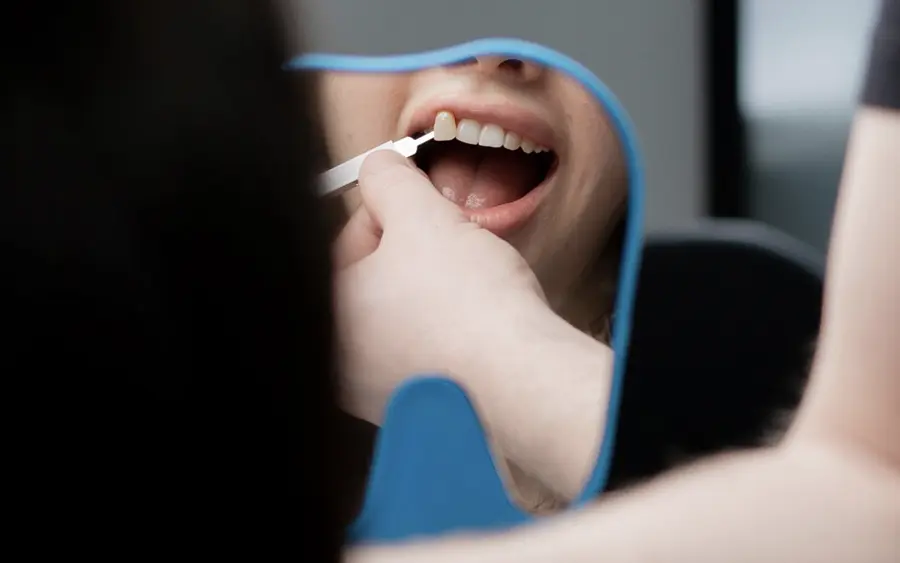
The tooth colour is selected using special colour scales (such as VITA 3D Master) under natural light.
Temporary veneers
In cases where excessive tissue has been removed from the teeth or there is a risk of sensitivity, temporary restorations are fitted to the patient until the permanent veneers are ready. However, in some cases where very little abrasion is required, temporary teeth may not be necessary.
The lab stage and the try-in
In the lab, porcelain veneers are made either by hand or with computer-aided design and manufacturing (CAD/CAM). Before being bonded, the finished restorations are checked in the mouth to make sure they fit, match the margins, and are the right colour. You can test the colour by using test pastes that look like the colour of the cement.
Cementation (Bonding)
This is the most important step to make sure the veneer sticks to the tooth.
Surface of the veneer:
Hydrofluoric acid roughens the inside of the porcelain, and silane is used to make the bond stronger.
Surface of the tooth:
First, phosphoric acid is put on the tooth enamel, and then a bonding agent is used.
Bonding:
Veneers are put on the tooth with light-cured or self-curing resin-based glues and held in place with a light-curing tool.
Checking and finishing
After the bonding is done, any extra sealants are cleaned off, and checks for occlusion (bite) and phonetic (speech) are done. Lastly, fine diamond tips or discs are used to smooth and polish the edges (margins).
- They reflect light like natural teeth, providing an extremely realistic and beautiful appearance. They are one of the most effective ways to achieve the smile of your dreams in terms of color, shape, and size.
- With methods such as crowns, the tooth is reduced much more. With veneers, only the front surface of the tooth is ground down by 0.3–0.7 mm, which is about the thickness of a fingernail. This means that most of your natural tooth structure is preserved.
- The porcelain surface is non-porous and smooth. It is much more resistant to substances that stain teeth, such as tea, coffee, and cigarettes, than natural tooth enamel. It retains its color for many years.
- Gums adapt very well to porcelain. When properly bonded, the risk of gum recession or irritation is low. It creates a hygienic surface that is compatible with oral tissues.
- It is usually completed in just 2-3 sessions. The tooth preparation process is performed under local anesthesia, so no pain is felt.
- With proper oral care and correct use, they can last 10-15 years or longer. They have an abrasion resistance very close to that of natural tooth enamel.
Disadvantages:
- As your tooth is prepared by grinding it down, this procedure is permanent. If you remove the veneers, your underlying worn teeth will be left unprotected and will require another restoration (crown, new veneer).
- Although porcelain is strong, it can crack or break if subjected to impact or biting on hard objects (olive pits, ice, pencils, etc.). They are not as durable as crowns.
- If you clench or grind your teeth at night, excessive pressure is placed on your veneers, significantly increasing the risk of breakage. In this case, your dentist will definitely recommend using a night guard.
- Due to the high-quality materials, special laboraprocesses,esses and experienced dentistry required, it is an expensive treatment even for a single tooth. Insurance policies generally do not cover cosmetic procedures.
- If you dislike the colour of your veneers after they have been fitted, or if you wish to make them whiter, whitening treatments will not be effective. New veneers will need to be made to change the colour.
- Over time, especially if oral hygiene is poor or if the patient smokes, slight discoloration may appear at the edge where the veneer meets the tooth. This is the most common complication.
Your dentist will assess the following factors during your examination and help you decide which type of veneer/crown is right for you.
- The current condition of your mouth,
- Your aesthetic expectations,
- Your teeth's bite (occlusion), and
- The durability requirements of your teeth structure.
To generalize:
- If you say, ‘My teeth are strong, but I'm not satisfied with their appearance,’ laminate veneers are probably a better and more protective option.
- If you say, ‘My tooth is broken, heavily filled, or has undergone root canal treatment, and I need to strengthen it,’ a crown is a good solution.
After the laminate veneer is put on, there are important things that both the dentist and the patient need to keep in mind to make sure the restoration lasts and looks good.
Checks and finishing after clinical use
Adjustments to the occlusion:
After bonding, the occlusion (how the teeth close) should be checked in both centric and eccentric positions. If there are high points, they should be ground down to make the finish smooth. A mutually protective occlusion makes the restoration more likely to work.
Cleaning and polishing the edges:
Any extra glue (cement) that is still on the edges of the restoration should be cleaned off, and these areas should be polished with fine diamond burs or rotary abrasive discs. You can use dental floss or abrasive strips to get rid of extra stuff between your teeth.
Follow-up appointments:
Restoration margins should be re-evaluated at the next appointment to determine whether there is any incompatibility at the gum line.
Oral hygiene and care
Regular cleaning:
Although the glazed surfaces of porcelain veneers reduce plaque accumulation, meticulous oral hygiene and adherence to home care instructions are essential to maintain gum health.
Gum health:
Not brushing and flossing your teeth enough can cause your gums to recede, which can expose the edges of your veneers and make them look less attractive or cause secondary caries.
Habits and way of life
Bruxism (Teeth Grinding):
People who grind or clench their teeth should wear a night guard because porcelain is thin and can break easily.
Smoking:
Long-term smoking can cause discoloration and aesthetic loss, particularly at the edges of veneers (marginal area).
Protection from hard impacts:
Although veneers bond with the tooth and gain resistance after being cemented, they are prone to fracture under excessive stress; therefore, biting hard objects should be avoided.
Monitoring potential complications
The following situations may require veneer replacement after treatment:
Marginal discoloration:
This is the most common complication. It becomes more pronounced, especially in cases where finishing and polishing are inadequate.
Other risks:
Adhesive dissolution (desiccation), porcelain fractures, gum recession, and sensitivity that may develop after restoration should be closely monitored.
Will I feel any pain during the laminate veneer application?
No. The procedure is performed under local anesthesia, so you will not feel any pain during the cutting process. There may be very slight sensitivity after the procedure, but this will pass quickly.
Is there an age limit for veneers?
Yes, they are generally not applied to patients under the age of 18-20. This is because tooth and jaw development is not complete before this age.
How long do laminate veneers last?
Depending on your oral hygiene and usage habits, they can last between 10 and 15 years. This period can be extended with regular check-ups.
Will my teeth look very white after getting laminate veneers?
No. Laminate veneers are designed to give teeth a natural appearance. Your dentist will select the colour of the veneers to match your neighboring teeth and skin tone. They provide an extremely natural appearance due to their high light transmission.
Can I have teeth whitening (bleaching) done after laminate veneers are fitted?
The colour of the veneers does not change. If you want teeth that are whiter than your veneered teeth, you can have your natural teeth whitened, but this may result in colour mismatch. It is best to decide on the color selection from the outset.
Can laminate veneers be removed?
They can be removed, but this procedure must be performed professionally. When a veneer is removed, the underlying worn tooth is left unprotected and requires a new veneer or crown.
How many sessions does treatment with laminate veneers take?
It is usually completed in 2 or 3 sessions. The first session involves examination and planning, followed by tooth preparation and taking impressions, and finally bonding.
Will laminate veneers damage my neighbouring teeth?
No. Veneers are only bonded to the tooth they are applied to. No procedure is performed on your neighboring teeth, nor are they damaged in any way.
Will my teeth decay after veneers are fitted?
Veneers themselves do not decay, but the natural tooth underneath can decay. Therefore, oral hygiene is very important.
Can I have veneers if I have old fillings?
Yes, it is usually possible. The dentist will assess the condition of the existing fillings and create a suitable base for the veneers. Sometimes the fillings may need to be replaced.
Does laminate veneer pose a risk during sports?
If you participate in contact sports, you must use a mouthguard to protect your teeth and veneers.
Does gum recession affect veneers?
Yes, if you have advanced gum recession, the edges of the veneers may become visible and affect the aesthetics. Gum problems should be treated first.
Will my speech be affected after laminate veneer application?
A slight difference may be felt for the first few days, but speech will return to normal once your tongue adjusts.