
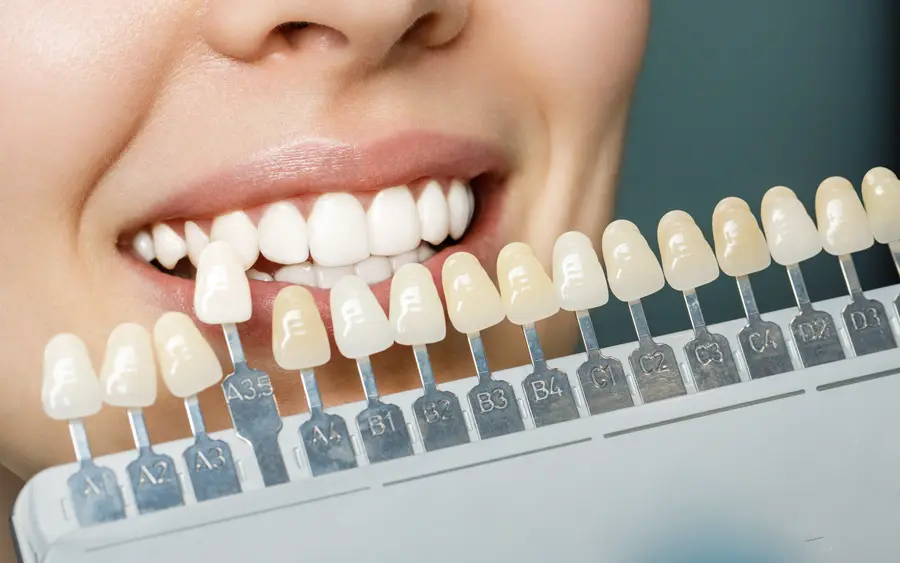
Porcelain Dental Veneers
If you want to achieve your dream smile and reflect your confidence in the most natural and lasting way, one of the most elegant and effective solutions in modern dentistry is porcelain laminate veneers. These thin, specially prepared porcelain sheets promise a sparkling smile that doesn't compromise on naturalness, perfecting the color, shape, size, and alignment of your teeth with minimal abrasion. But you may be wondering about the durability and lifespan of these aesthetic miracles and whether they are the right choice for you...
The experts at Antalya Dental A.R.T Clinic, one of Antalya's leading cosmetic dentistry centers, share all the necessary knowledge and experience to ensure your porcelain veneers shine healthily for decades through personalized treatment planning and the use of high-quality materials that meet international standards. In this article, we will take an in-depth look at the most frequently asked questions about porcelain veneers.
What is a dental veneer?
A dental veneer is a thin, tooth-colored restoration that is glued to the front (labial) surface of a tooth to make it look better, hide discolouration, or fix structural problems. These restorations are a less invasive (tooth-preserving) option than full ceramic crowns, especially for front teeth where looks are very important.
There are several types of dental veneers based on how they are applied, what materials are used, and how much the tooth is abraded.
By how it is used
Direct veneers (composite):
The dentist adds layers of composite resin directly to the tooth in one visit. They are safe and cost-effective since they don't require much or any grinding of the tooth surface.
Indirect veneers:
After getting a mould of the tooth, they are made in a lab or outside the mouth with digital tools. They are usually made of porcelain or sophisticated composites, which are then glued to the tooth.
Types dependent on the material utilised
Porcelain (ceramic) veneers:
These are the most frequent type and give the best outcomes in terms of looks.
Feldspathic porcelain:
Made by putting powder and liquid together. It lets a lot of light through and looks the most like a real tooth.
Glass ceramics (E-max / lithium disilicate):
They last a lot longer and are made by pressing. They are perfect for circumstances where both looks and strength are important.
Composite veneers:
They cost less than porcelain, but they are more likely to fade and wear out over time.
Types based on tooth preparation (enamel reduction)
Traditional veneers:
Require the removal of a layer of approximately 0.5 mm to 0.7 mm from the front surface of the tooth. This space is necessary for the porcelain to achieve a natural appearance.
Minimal-prep veneers:
Only a very thin layer of 0.1 mm to 0.3 mm is removed from the tooth enamel. This preserves the tooth structure to the maximum extent.
No-prep veneers / Dental contact lenses:
These are restorations that are applied without any abrasion to the tooth surface, approximately 0.3 mm or thinner. They are generally preferred when the teeth are positioned too far back or are spaced apart.
According to production technology
CAD/CAM veneers: These are modern veneers produced using digital scanners and computer-aided design/manufacturing systems. A digital impression of the tooth is taken and prepared quickly by carving from special blocks.
The main situations in which porcelain veneers are used are as follows:
Discoloration that cannot be remedied by whitening:
They are used to mask advanced discolouration that does not respond to teeth whitening procedures. They are an effective solution for severe staining caused by tetracycline antibiotics, particularly when used in childhood, or structural discoloration such as fluorosis.
Closing gaps between teeth (diastema):
They are frequently preferred to close unsightly gaps between teeth and achieve a more harmonious alignment.
Repairing broken, cracked, or worn teeth:
It is used to restore small fractures, cracks, or surface wear (erosion) on the tips of teeth caused by friction with acidic foods.
Correction of shape and size abnormalities:
This is applied to bring the size of congenital shape abnormalities (e.g. wedge-shaped lateral incisors known as ‘peg lateral’) or teeth that are smaller than normal (microdontia) to ideal proportions.
Correction of minor misalignments:
This may be preferred to create an ‘instant orthodontic’ effect in patients who refuse long-term orthodontic (braces) treatment, in order to correct minor rotations or curvatures in the teeth.
Renewing smile design:
Used to give a younger and healthier appearance by replanning the shape, length and colour of the teeth to suit the patient's facial features.
Renewing old and discoloured fillings:
It plays a role in replacing wide composite fillings in the front teeth that have changed colour over time or have worn edges with a more aesthetic and durable option.
Porcelain veneers give super results, especially on the front teeth, to beautify your smile. Which teeth will be treated depends on the dentist's control, the shape of your smile, and the condition of your teeth. You can talk to your dentist and make the most suitable plan.
Porcelain veneers are usually applied to the following teeth:
Front teeth (incisors):
The front four teeth in the upper and lower jaw (the center ones) are the most visible when smiling. Porcelain veneers are a suitable option for correcting yellowing, stains, cracks, fractures, gaps, or shape problems in these teeth.
Canine teeth:
The pointed teeth next to the front teeth play an important role in the smile. Porcelain veneers are often used to correct the color, shape, or size of these teeth.
Premolars (rare):
Sometimes veneers can be applied to premolars (especially the upper ones), which are slightly visible when smiling. But this depends on the smile and what the person wants.
- Back teeth (molars): Since chewing pressure is high, fillings or crowns are used here instead of veneers.
- Very weak teeth: Veneers may not be suitable for teeth with little enamel or very decayed teeth.
- Very crooked teeth: It works for mild curvatures, but serious alignment problems require braces.
Candidates suitable for porcelain veneers can be categorized as follows:
Individuals with aesthetic and structural defects
Severe discoloration:
Individuals with severe tooth discoloration due to tetracycline antibiotic use, fluorosis, trauma, or aging that does not respond to teeth whitening (bleaching) procedures.
Gaps between teeth (diastema):
Individuals with aesthetically unappealing gaps between their teeth who wish to have these gaps closed.
Broken or worn teeth:
Individuals with teeth that are broken, cracked, or worn due to causes such as erosion/attrition.
Developmental anomalies:
Individuals complaining of ‘peg lateral’ (wedge-shaped lateral incisors), microdontia (smaller than normal teeth), or mismatched tooth shape and size.
Those with mild malocclusion
Patients with mild tooth misalignment or rotation who do not wish to undergo long-term orthodontic (braces) treatment or who desire an aesthetic touch in addition to orthodontics. This is sometimes referred to as ‘instant orthodontics.’
Those who meet clinical suitability criteria
A patient's eligibility for porcelain veneers depends not only on aesthetic concerns but also on the physical conditions inside the mouth:
Sufficient tooth enamel:
For the porcelain to bond strongly to the tooth, there must be a sufficient amount of healthy enamel tissue on the front surface of the tooth. In cases where enamel tissue is insufficient, the risk of veneers falling off or failing increases.
Healthy gums:
Individuals with no gum disease (periodontal disease) prior to treatment and good oral hygiene are the most suitable candidates.
Absence of bruxism:
Individuals who grind or clench their teeth are generally not considered suitable candidates due to the risk of porcelain fracture; these individuals may be advised to use a night guard after treatment.
Compatible occlusion:
Individuals without a malocclusion that creates excessive stress between the upper and lower teeth (e.g., edge-to-edge bite or crossbite) are more suitable for this treatment.
- Those with advanced gum disease or untreated decay.
- People with very thin or damaged tooth enamel (the veneer may not hold).
- If the teeth have severe curvature or misalignment, braces or clear aligners are needed instead of veneers.
- If you have a habit of clenching or grinding your teeth at night, this can damage the veneers. This habit should be controlled first (e.g., with a night plaque).
- People who have the habit of biting hard things such as fingernails, pencils, walnut shells, etc., because the veneers may crack.
- People who do not brush their teeth regularly or do not pay attention to oral hygiene can shorten the life of the veneers.
The application process for porcelain veneers (laminates) generally follows these steps:
Planning and preparation (smile design)
Assessment:
During the first appointment, the patient's expectations are noted, photographs are taken, and impressions of the teeth are taken to prepare models.
Mock-up:
A trial layer called a ‘mock-up’ is applied to the teeth using temporary materials. This allows the patient and dentist to see what the teeth will look like when finished, without any work having been done yet.
Preparing the teeth (Grinding)
A very small amount of tissue may need to be removed from the tooth surface to prevent the porcelain from looking rough on the tooth.
Minimal grinding:
Usually, a layer between 0.3 mm and 0.7 mm thick, i.e., as thin as an eggshell, is removed from the tooth enamel. In some ‘no-prep’ (unprepared) cases, no grinding is performed at all.
Precise margins:
A slight chamfer is created at the area where the gum begins (cervical margin) to allow the porcelain to fit naturally.
Tips:
The cutting edge of the tooth is either preserved (window type) or slightly shortened (overlap/bevel) for the porcelain to grip the tooth, depending on the design requirements.
Impression taking and temporary teeth
Measurements:
Once the teeth have been prepared, impressions are taken from the mouth using the traditional method, or digital scanning (optical measurement) is performed using modern CAD/CAM systems.
Temporary veneers: While the porcelain veneers are being prepared in the laboratory (usually 1-2 weeks), temporary veneers can be fitted to prevent the patient's teeth from becoming sensitive and to maintain their aesthetic appearance.
Laboratory stage
The impressions are sent to the laboratory. Here, specialist technicians produce custom porcelain veneers for the patient using computer-aided design (CAD/CAM) or manual techniques (refractory casting).
Trying and bonding (Cementation)
Try-in:
The porcelain veneers are placed on the teeth before bonding; their fit, color, and shape are checked. Special ‘trial pastes’ may be used to precisely adjust the color.
Surface preparation:
To ensure a very strong bond, the tooth surface is roughened with phosphoric acid, while the inner surface of the porcelain is roughened with hydrofluoric acid and a substance called silane.
Bonding:
Veneers are placed on the tooth using a special resin (dental cement) and hardened within seconds using blue light (light-curing device) to ensure they bond with the tooth.
Final touches:
After bonding, the closure of the teeth is checked, excess adhesive is cleaned off, and the edges are polished to ensure they are smooth.
Porcelain dental veneers, while frequently preferred as a treatment method in aesthetic dentistry, have both advantages and disadvantages. These advantages and disadvantages are as follows:
Advantages of porcelain veneers:
- Porcelain offers a shine and transparency very similar to natural tooth enamel. Your teeth look white, symmetrical, and natural; no one will realize they are veneers.
- Color, shape, and size can be customized, so you get exactly the smile you want.
- Things like tea, coffee, and cigarettes do not easily stain porcelain. It stays bright and clean for a long time.
- If it is well looked after, it can be used for 10-15 years, sometimes even longer. It is very strong against breakage and abrasion.
- Results are obtained in a short time (usually 1-2 weeks) without the need for long processes such as wire treatment for slight crookedness, gaps, cracks, or color problems.
- Only a thin layer of enamel is removed from the tooth, so most of the tooth is preserved. In some cases, no abrasion may even be required (prepless veneers).
- It can reduce hot-cold sensitivity by covering enamel-damaged or sensitive teeth.
Disadvantages of porcelain veneers:
- It is a permanent procedure because a little of the enamel is shaved away. If you remove the veneer, your tooth cannot be restored; it needs to be replaced with another veneer.
- Porcelain veneers are more expensive than composite veneers. The price depends on the quality of the material used, the number of teeth, and the experience of the dentist.
- Although they are very strong, biting hard things (such as walnuts, pencil tips, or fingernails) or teeth grinding (bruxism) can damage the veneers, cracking or breaking them.
- Care must be taken with hard foods.
- If a veneer is broken or damaged, it usually cannot be repaired; it has to be replaced, which means additional costs.
To prolong the life of your porcelain veneers and always have a radiant smile, here are the care rules to follow:
- Brush twice a day with a soft-bristled toothbrush and a non-abrasive toothpaste.
- Clean the junction of the veneers with the gums using dental floss or an interdental brush.
- Complete daily care with an alcohol-free mouthwash.
- Avoid chewing hard foods (ice, nuts, hard candies).
- Sticky foods (chewing gum, caramel) increase the risk of displacement of veneers.
- Acidic drinks can affect the gum line; limit consumption.
- Habits such as nail biting and pen biting can damage the veneers.
- The use of a night plaque is recommended for those with teeth-clenching problems.
- Smoking can cause discoloration of the veneer-gum border.
- Visit your dentist every six months.
- Consult your dentist only for professional cleaning.
- Have the condition of your veneers checked regularly.
- If your veneer breaks or falls off, keep it and contact your dentist immediately.
- In case of hypersensitivity, you can use fluoride products.
- Seek professional help if you experience unexpected pain or discomfort.
- Rinse your mouth after stained drinks such as coffee, tea, and red wine.
- Have your veneers polished once a year to keep them shiny.
- Use special care products recommended by your dentist.
- Take care of your gum health to prolong the life of your veneers.
- Every 10 years, evaluate the condition of your veneers with your dentist.
Porcelain veneers last an average of 10 to 15 years with proper care and regular check-ups. In some cases, it is even possible to extend their lifespan up to 20 years. However, this duration may vary depending on the following factors.
Factors affecting durability:
Oral hygiene habits: Regular and proper brushing and flossing are the factors that most affect maintenance.
The patient's teeth grinding or bruxism habit:
If this condition exists and a night guard is not used, the risk of cracks or breakage in the veneers increases.
Food and drink habits:
Biting hard objects (ice, hard sweets, nut shells), and consuming excessively hard and sticky foods can damage veneers. Excessive coffee, tea, red wine, and smoking can cause discoloration (veneers do not stain, but the adhesives may change color).
The expertise of the dentist and technician:
Proper planning, preparation, and the use of high-quality materials extend the lifespan.
Bonding quality:
Perfect bonding of the veneer to the tooth is one of the fundamental requirements for its longevity.
- Establish a good oral hygiene routine.
- Never use your teeth to break hard objects.
- Do not neglect your regular dental check-ups (every 6 months).
- If you have a teeth-grinding habit, be sure to use the night guard recommended by your dentist.
- Limit overly coloring foods and drinks as much as possible, and do not smoke.
The price of porcelain dental veneers varies between 150 and 300 euros depending on the selected clinic, the material used, and the scope of treatment. Since prices may vary depending on the city where the clinic is located, the experience of the dentist, and your treatment plan, it is recommended that you contact our clinic, Antalya Dental A.R.T Clinic, directly to get information about the current price.
Is there any pain during and after porcelain veneer application?
- No pain is felt during the procedure thanks to local anesthesia.
- Mild tenderness is normal in the first 24-48 hours after the procedure
- Sensitivity usually goes away on its own; if necessary, desensitiser toothpaste is recommended
Can veneers be applied to young patients?
Under 18 years of age, it is generally not applied. Tooth development should be completed. In exceptional cases (trauma, etc.), it can be evaluated.
How long can temporary veneers be used?
- Usually used between 1 and 3 weeks
- Very fragile, handle with care
- Its stickiness decreases over time
- Permanent veneers are removed when ready
Will the teeth return to their original color when the veneers are removed?
- No. Because the tooth surface has been abraded, teeth without veneers look smaller, and the color difference can be significant.
- After removal, alternatives such as new veneers, composite fillings, or crowns are usually required.